Dentures vs Digital Dentures: What Is the Difference?
Dentures have helped people replace missing teeth for generations, yet the way they are made is changing. Traditional denture methods still have an important place in dental care, while digital dentures use computer-based technology during design and production. If you are comparing dentures vs digital dentures, the key differences usually come down to how impressions are taken, how the denture is designed, the manufacturing process, appointment requirements and what happens if a replacement is needed later.
Understanding these differences can make conversations about your treatment options much easier. Neither approach is automatically right for every person, so it helps to know what each process involves before discussing your needs with a dental professional.
What Are Traditional Dentures?
Traditional dentures are removable dental appliances used to replace missing teeth and surrounding gum tissue. They may replace all the teeth in the upper or lower jaw, or they may replace several missing teeth as a partial denture.
The traditional production process relies heavily on physical impressions, models and hands-on laboratory work. An impression material is placed inside the mouth to record the shape of the gums and other oral structures. From these impressions, physical models can be produced and used to develop the denture.
Several stages may be required before the finished denture is ready. These can include initial impressions, more detailed impressions, bite records and a trial stage where the position and appearance of the teeth can be assessed.
This approach gives the clinician and dental technician opportunities to make changes during production. It has been used for many years and remains a common way to produce both full and partial dentures.
What Are Digital Dentures?
Digital dentures serve the same basic purpose as traditional dentures: replacing missing teeth and restoring functions such as biting, chewing and speaking. The main difference is the way information about the mouth is recorded, processed and used to make the denture.
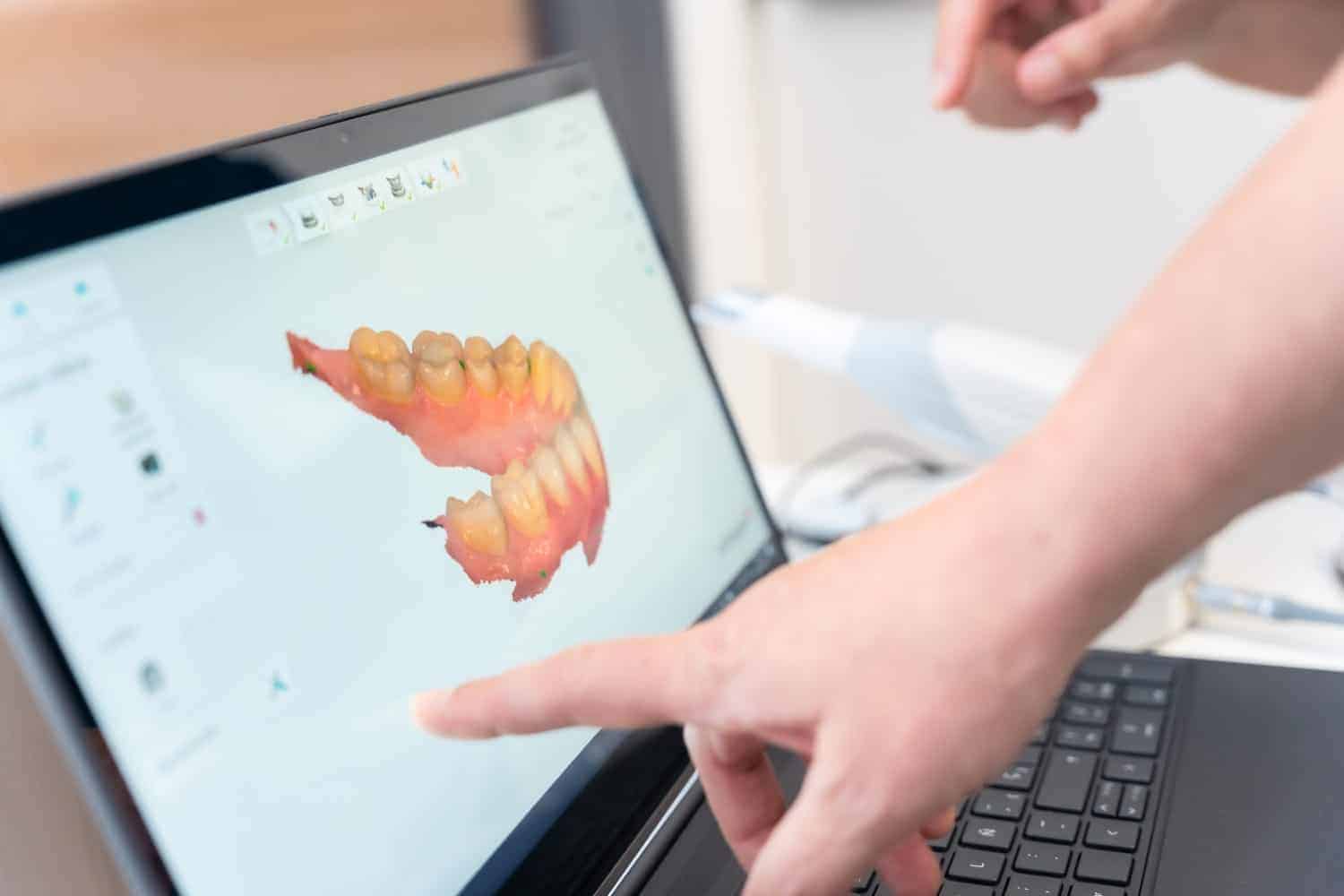
Depending on the clinical situation and equipment available, digital denture treatment may involve digital scanning rather than relying entirely on conventional impression materials. Information about the mouth and bite can then be entered into computer software, where the denture is designed digitally.
Once the design has been completed, manufacturing may involve computer-controlled milling or 3D printing. The exact method varies according to the type of denture and the materials being used.
The term “digital dentures” therefore describes a workflow rather than a completely different type of tooth replacement. The patient still receives a removable denture, but digital technology is involved in one or more stages of its creation.
Dentures vs Digital Dentures: The Main Differences
For patients, the most noticeable differences often occur before the finished denture is fitted. Traditional production relies more heavily on physical materials and laboratory stages, while a digital workflow stores much of the relevant information electronically.
- Traditional dentures commonly use physical impressions and models, while digital workflows may use oral scans or digitised records.
- Conventional dentures often involve several manual laboratory stages, while digital designs are created using computer software.
- Digital denture records can often be stored electronically, which may be useful if the denture needs to be reproduced in the future.
- The number and length of appointments can differ, although digital treatment does not guarantee fewer visits in every case.
- Adjustments may still be necessary with either method because comfort depends on the individual mouth, bite and supporting tissues.
These differences can affect the patient experience, although the final result depends on far more than the technology used to manufacture the appliance.
Are Digital Dentures More Comfortable?
Digital technology does not automatically mean a denture will feel more comfortable. Comfort depends on how well the denture fits the gums, how the upper and lower teeth meet, the amount of available bone and soft tissue, saliva levels and how the mouth responds to wearing a removable appliance.
Some patients may prefer digital scanning because it can reduce the amount of impression material placed in the mouth. This can be relevant for people who find conventional impressions uncomfortable or who have a sensitive gag reflex. However, scanning is not suitable for every stage of every denture case.
A well-made traditional denture can also provide good comfort and function. The quality of the assessment, records, design and fitting remains important regardless of whether the workflow is traditional or digital.
Do Digital Dentures Look Different?
Both traditional and digital dentures can be designed with appearance in mind. Tooth size, shape, colour and position can all influence how natural a denture looks, as can the appearance of the artificial gum material.
Digital software allows the denture arrangement to be viewed and modified on screen before manufacturing. This gives the clinician and technician a digital representation of the proposed design.
Traditional methods approach the same issue differently. A physical trial denture may be used so the tooth position, bite and appearance can be reviewed before the final appliance is completed.
For patients, the more useful question is often not whether digital dentures look better, but how the chosen method will address their facial appearance, existing teeth, bite and personal preferences.
Can Digital Dentures Be Replaced More Easily?
One significant feature of a digital workflow is the ability to retain digital design information. If records remain suitable and available, they may provide a useful starting point when a denture is lost, damaged or needs to be remade.
That does not mean an identical replacement can always be produced without another examination. The mouth changes over time. Bone and gum tissues can alter after teeth are lost, while changes in health, weight, medications and oral conditions may also affect denture fit.
For this reason, an older digital file does not remove the need to check whether the original design is still appropriate. A new assessment may show that changes are required before another denture is made.
How Long Do Traditional and Digital Dentures Last?
There is no single lifespan that applies to every denture. Wear, changes inside the mouth and how the denture is cared for can all affect how long it remains suitable.
A denture may continue to look acceptable even when the fit has changed. This is important because the gums and underlying jawbone can gradually change after tooth loss. As these tissues change, a denture that once fitted well may begin moving during eating or speaking.
Regular dental reviews can help identify changes in fit, bite and oral tissues. Dentures should also be checked if they become uncomfortable, unstable, cracked or noticeably worn.
Who May Be Suitable for Digital Dentures?
Suitability depends on the condition of the mouth and the type of denture required. Existing dentures, remaining teeth, jaw relationships and the condition of the gums can all affect which workflow is appropriate.
Someone interested in learning about local denture options could discuss both conventional and digital methods with Harvey Smiles Denture Clinic on the Gold Coast to understand how the available approaches differ.
Digital technology can be useful, but treatment should still begin with an assessment of the individual rather than the assumption that one manufacturing method will suit everyone.
Which Is Better: Dentures or Digital Dentures?
There is no universal winner in the dentures vs digital dentures discussion. Traditional dentures use established physical impression and laboratory techniques, while digital dentures introduce computer-based scanning, design or manufacturing into the process.
Digital records may offer practical advantages for design storage and future reproduction, while traditional techniques remain suitable for many clinical situations. Both approaches can still require fitting appointments and later adjustments.
The important point is that “digital” describes how the denture is produced rather than guaranteeing a particular clinical result. Fit, bite, oral health, denture design and ongoing care remain central to how well any denture works. If you are comparing the two options, ask which process is appropriate for your mouth, what appointments are involved and how future adjustments or replacements would be handled.