How to Treat a Bulging Disc
A bulging disc is a common injury in the spine that occurs in the intervertebral disc of the spine. Bulging disc can develop in your upper and mid-back, neck or at your back (lower back). A bulging disc is also regarded as a protruding disc or slipped disc. However, you may think a bulging disc and a herniated disc are the same, but they’re not. When a herniated disc occurs, a crack develops in the outer part of the disc regarded as the annulus. A small part of the disc is usually affected by the break, as the nucleus pulposus’s soft inner material ruptures out of the disc. A bulging disc is not the same as the herniated disc because the disc only protrudes out of the space it naturally fills up between the backbones, but the disc doesn’t crack or break out.
When a bulging disc develops or occurs, it does affect a much larger area of the disc compared to a herniated disc. Even though it is more common to have a bulging disc occurring among people than a herniated disc, herniated disc feels more painful than a bulging disc. It is even possible for a person having a bulging disc injury not to feel any pain. Furthermore, spinal discs are the ring-like sections of the spine that serve as shock-absorbers, which make a separation between the skeletal backbone bodies. The spinal discs allow movement at each of the spinal stage and adequate space for the primary spinal nerves to come out from the canal around the spine. After that, they travel to the limbs.
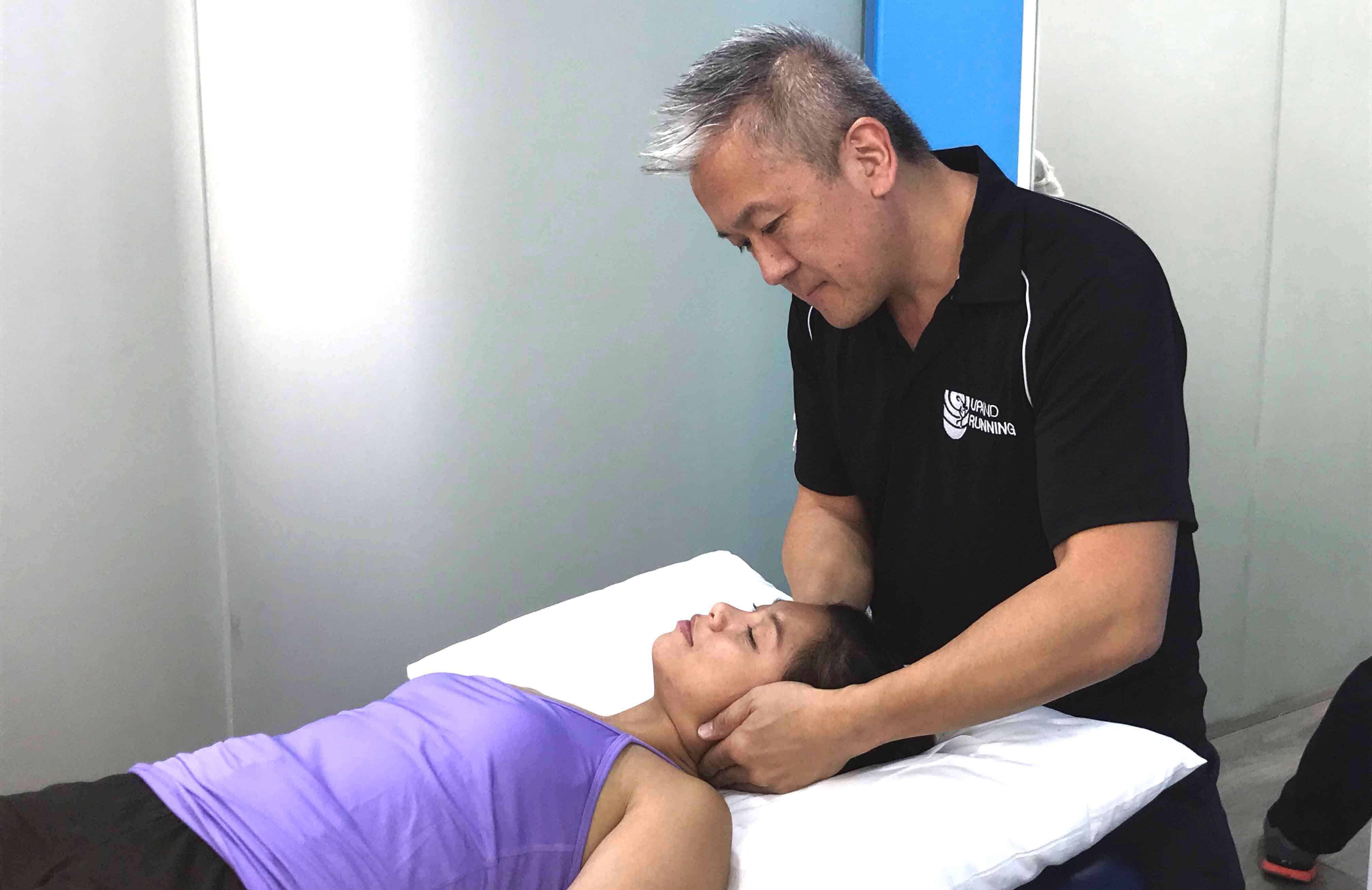
In terms of diagnosis, a doctor or physiotherapist will carry out some clinical checks or tests to verify if there is a spinal disc injury. Afterward, they will now detect if there are any indications of the nerves being compressed. During diagnostic stages, the physiotherapist will suspect an injury in the spinal disc based on the experiences you have had with the injury and behavioural symptoms. The CT and MRI scans are the most reliable and accurate tests during diagnosis to determine the extent of the spinal disc injury. Take a look at the treatments given to a patient or patients with a bulging disc injury.
Bulging Disc Treatment
Bulging disc treatment options can be divided into two parts: it can be treated either conservatively or through surgical means. That is conservative treatment and surgical treatment. Most bulging disc injuries with moderate or minor conditions can be treated conservatively, without having surgery. A bulging disc injury doesn’t have to be treated through surgery. The bulging disc treatment depends on the symptoms. A patient’s sign can be managed ordinarily with conservative treatments like physical therapy, waiting, and observing to see if the symptoms would go away. A lot of patients who have bulging disc problems do see their symptoms go away after some time.
However, if the bulging disc injury is at a critical stage or condition, your physiotherapist or doctor will most likely carry out a test. Tests like a discectomy and a laminotomy are likely performed. The medical term laminotomy means “create a hole or an opening in the lamina.” While discectomy means “remove the disc.” The reason for removing a bulging disc is to relax your spinal nerves. However, many medical practitioners have stopped this conventional way of decompressing the spinal cord due to the associated nerve problems that result from it. Your doctor may also carry out a transthoracic decompression if surgical operation is needed. Also, it will be performed if the bulging disc occurred in the thoracic spine. The transthoracic decompression is a method of decompressing the spinal nerves. It is done by taking out a tiny quantity of problem disc and skeletal body via one small hole beside the chest. If a big part of the vertebra has to be removed, a spinal fusion may be required.
Causes of Bulging Disc
Bulging disc injuries are often a part of aging. As you begin to age, some discs most likely get to protrude. It is due to aging and the intervertebral disc degeneration process. Having a bulging disc is not an indication that something serious is occurring or has happened to your spine. It only gets more severe as it bulges out to cause your spinal canal to become narrow. If there is the presence of bone spurs on the side joint at the back of the bulging disc, the fusion may get the spinal canal to narrow in that area. The deterioration or weakening of the disc can be caused by smoking tobacco. Also, athletes that engage in vigorous physical activities can sustain an injury to the intervertebral disc. This can thereby weaken the disc and pose serious problems too.